

Colour that carries a whole wall
Six hundred and eighty-one abstract oil paintings: poured colour fields, palette-knife texture, hard-edged geometry, quiet tonal washes and big gestural sweeps in everything from ochre and rust to ink blue and soft grey. Each one is hand-painted on canvas by a university-trained artist in the size and finish you choose, then delivered free Australia-wide in 21 to 28 days.
- 100% hand-painted oil on canvas
- Painted to order in 7 sizes, framed or stretched
- Free delivery Australia-wide, 21 to 28 days
- 30-day money-back guarantee
- Rated 4.81/5 from 550 reviews
Other painting styles
Three to start with
Three ways abstracts work
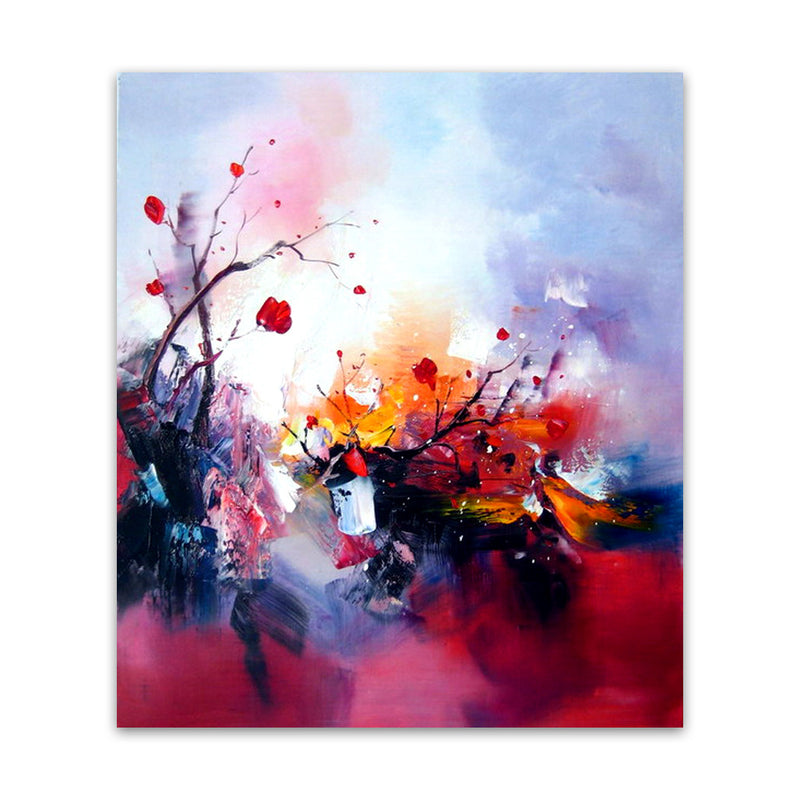
Collision of Colors
A big gestural canvas gives a plain wall a focal point without adding a subject, so the room reads calm and considered rather than busy or themed.
Abstract Art · from $359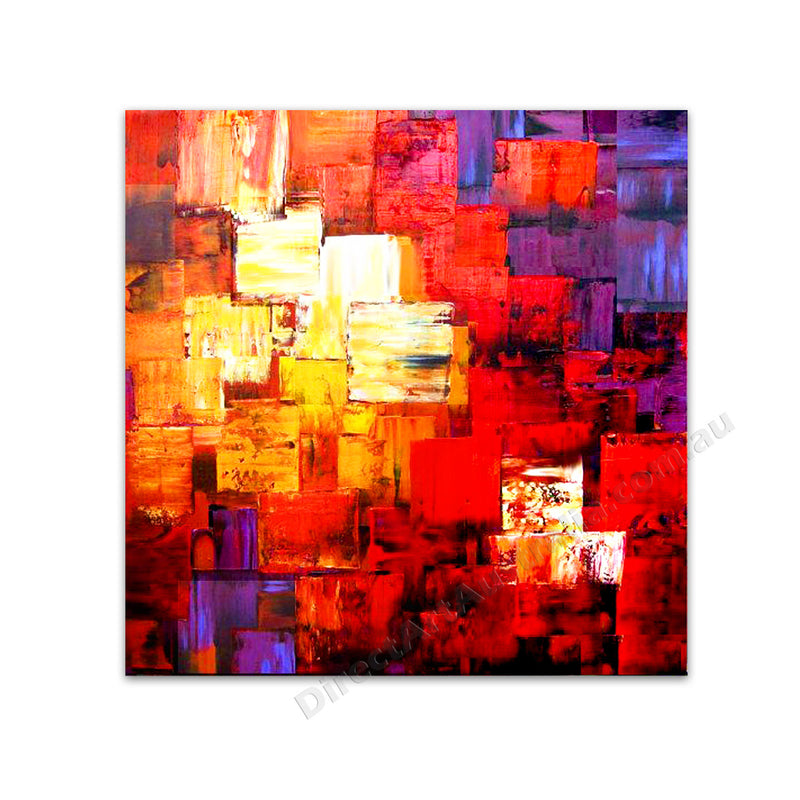
Sunset Patchwork
A tonal, textured piece in greys, chalk and sand does the quiet work, holding a wall together while the furniture and rugs carry the colour.
Abstract Art · from $359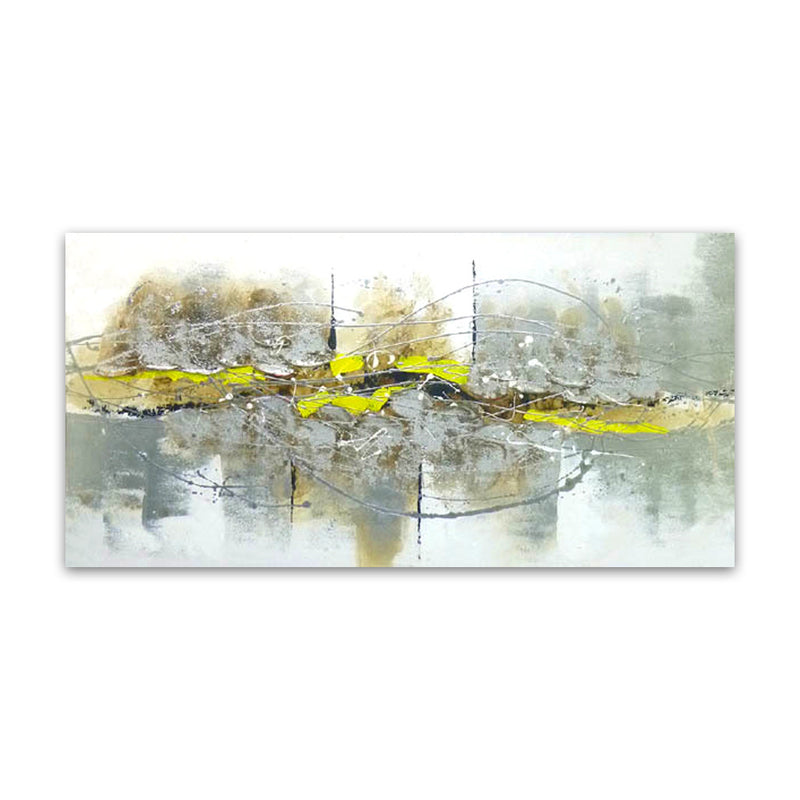
Yellow Streak
A high-contrast colour block pulls one accent shade out of your cushions or joinery and repeats it at scale, which is what makes a scheme look deliberate.
Abstract Art · from $349All 681 abstract oil paintings
Every print is made to order. Stretched ready to hang, or with a floating frame. 30-day money-back guarantee.
-
Collision of Colors | Pink Red and Blue Blossom Abstract Oil Painting -
Sunset Patchwork | Red Orange and Purple Palette Knife Abstract Oil Painting -
Yellow Streak | Grey and Yellow Abstract Band Oil Painting -
Mood | Pastel Pink and Teal Abstract Oil Painting -
Blossom | Pink and Blue Fluid Abstract Oil Painting -
Knife Painting FA68901 -
Crimson Drift | Red Black and White Abstract Oil Painting -
Ember Horizon | Red and Gold Textured Abstract Oil Painting -
Blue Calm | Abstract Horizon Seascape in Aqua Oil Painting -
Heat of the Sun | Orange and Grey Textured Abstract Oil Painting -
Murky Waters One -
Modern Flower | Red Bloom with Black Brushstrokes Abstract Oil Painting -
Murky Waters Two -
Textured Quarters | Red Grey Green Textured Abstract Oil Painting -
Consternation | Red and Gold Textured Abstract Oil Painting -
Aquamarine -
Pastel Field | Blue Wildflower Meadow Abstract Oil Painting -
Enigma | Red and Gold Textured Abstract Oil Painting -
Blue Waterfalls | Turquoise and Gold Abstract Waterfall Oil Painting -
Blue Desire | Blue and Orange Panoramic Abstract Oil Painting -
Sunlit Patchwork | Yellow and Blue Block Abstract Oil Painting -
Jeopardy -
Harbour Glow | Abstract City Skyline at Sunset Oil Painting -
Prism Current | Colourful Palette Knife Abstract Oil Painting


Why abstract works
Abstract paintings are bought for palette and texture, not for subject
With no image to read, the eye goes straight to colour and surface, which is exactly where a hand-painted canvas beats a print.
Most people choose an abstract on a phone screen, where every painting looks flat and slightly brighter than it is. In the room it behaves differently: impasto ridges throw tiny shadows that shift through the day, and thin washes go deeper under lamplight. Look at the dominant colour first and ask whether it already exists somewhere in the room, a rug, a cushion, a timber tone. If it does, the painting will settle in immediately.
Go larger than feels safe. Above a three-seater, aim for roughly two-thirds of the sofa width and hang the centre of the canvas around 145 to 150 cm from the floor, or 20 to 25 cm above the backrest. Abstracts fail when they compete: a busy multicolour canvas over a patterned rug reads as noise. Pair a loud painting with quiet floors, or a textured neutral with a bold room. Avoid matching a cushion shade exactly, near enough looks intentional, identical looks like a showroom.
How your painting is made
- Choose the size and finishSeven standard sizes from 60 × 50cm to 200 × 135cm. Stretched ready to hang, rolled, or one of our frames. The size guide on every painting shows it to scale.
- Painted to order, by handA university-trained artist paints your piece in oils on canvas, working from the original. Two to three weeks at the easel, then drying time.
- Stretched, framed, checkedGallery-wrapped or framed in our workshop, then photographed and checked before it leaves.
- Delivered free, Australia-wideMade to order in 21 to 28 days, then tracked to your door. Thirty-day money-back guarantee if it isn't what you hoped.
Questions people ask
Is this a print or a real painting?
A real painting. Every piece is hand-painted in oils on canvas by a professional artist. Nothing here is printed, and nothing is a print with paint dabbed on top.
How close is it to the original?
Very. Our artists work from high-resolution references of the original and match composition, colour and brushwork. Because it is painted by hand, no two are identical, which is rather the point.
What sizes can I order?
Seven standard sizes, from 60 × 50cm up to 200 × 135cm, and custom sizes on request. Open the size guide on any painting to see each size to scale next to a sofa.
Framed or unframed?
Your choice at checkout: stretched and ready to hang, rolled in a tube, or framed in floating, classic or ornate frames. A floating frame adds a few centimetres each side; an ornate frame adds roughly 8 to 12cm.
How long does it take?
21 to 28 days, because it is painted to order. Delivery is free and tracked anywhere in Australia.
What if I don't love it?
Thirty-day money-back guarantee. Tell us within thirty days of delivery and we will make it right or refund you.

Bold statement colour, quiet neutrals and richly textured knife work — every abstract here is painted by hand in oils on canvas, made in the size your wall actually needs.
What is abstract art?
Abstract art is painting that does not set out to depict anything recognisable. There is no landscape behind it, no figure, no bowl of fruit — colour, shape, line and texture are the subject in their own right rather than a means of describing something else.
It arrived remarkably late. For most of European history a painting was expected to represent the visible world, and it was only around 1910 that artists began removing the reference altogether. Wassily Kandinsky is usually credited with the first purely abstract works — though the Swedish painter Hilma af Klint had been making them since 1906, then left instructions that her work not be shown until twenty years after her death. It was not exhibited until 1986. Kazimir Malevich took the idea as far as it will go with Black Square in 1915: a black square, and nothing else.
That history is why abstract art asks something different of you. There is nothing to identify, so the useful question is not what is it but what does it do — whether it settles a room or charges it, whether its colour agrees with the light you actually get through your windows.
It is also why it works so well in a home. A landscape commits a wall to a place. An abstract commits it to a mood, which turns out to be a much easier thing to live with for ten years.
Choosing one for your room
Start with the light, not the sofa. A south-facing room in Australia gets cool, indirect light all day, which mutes warm colours — ochres and rusts can go flat. North-facing rooms take strong colour easily.
Go bigger than feels sensible. The most common regret with abstract art is scale. One large canvas reads as deliberate; three small ones usually read as indecision.
Texture carries further than colour. Heavily worked knife paintings hold up in a room you walk past all day, because the surface changes as the light moves. That is also the part a printed reproduction cannot give you.
Common questions
What is abstract art, simply put?
Art that does not try to represent anything you could name. Instead of depicting a subject, it uses colour, form, line and texture as the subject. It ranges from the almost-recognisable, where a landscape or figure has been simplified nearly out of existence, to work with no reference to the visible world at all.
When did abstract art start?
Around 1910. Wassily Kandinsky is conventionally credited with the first non-representational paintings, and Kazimir Malevich pushed the idea to its limit with Black Square in 1915. The Swedish artist Hilma af Klint was in fact painting abstract work from 1906, but she withheld it from public view and it was not exhibited until 1986.
Does abstract art have meaning?
Usually, but not the kind you decode. Kandinsky wrote at length about colour affecting the viewer the way music does, without needing a story attached. Most abstract painters are after a particular feeling rather than a hidden message, so there is generally no correct reading to be missed.
How much does abstract art sell for?
Anything from tens of dollars for a mass-produced print to over US$100 million at auction — Jackson Pollock and Mark Rothko both sit in that bracket. Hand-painted abstracts here start at $249, roughly what a large printed canvas costs elsewhere.
What size abstract painting should I buy?
As a rule of thumb, a painting above a sofa or bed should be around two-thirds the width of the furniture beneath it. Most people go too small. Every work here is made to order, so you can have the size that suits the wall rather than the nearest size in stock.
Are these prints or real paintings?
Paintings. Every abstract in this collection is hand-painted in oils on canvas by a professional artist — never a print, never a giclée. We do sell canvas prints, but they are a separate range and are labelled as such.